Intentional Living · 6 min read
By Sybelle Nakhle
Designing a bedroom for rest
Layered linen, considered lighting and fewer, better objects.
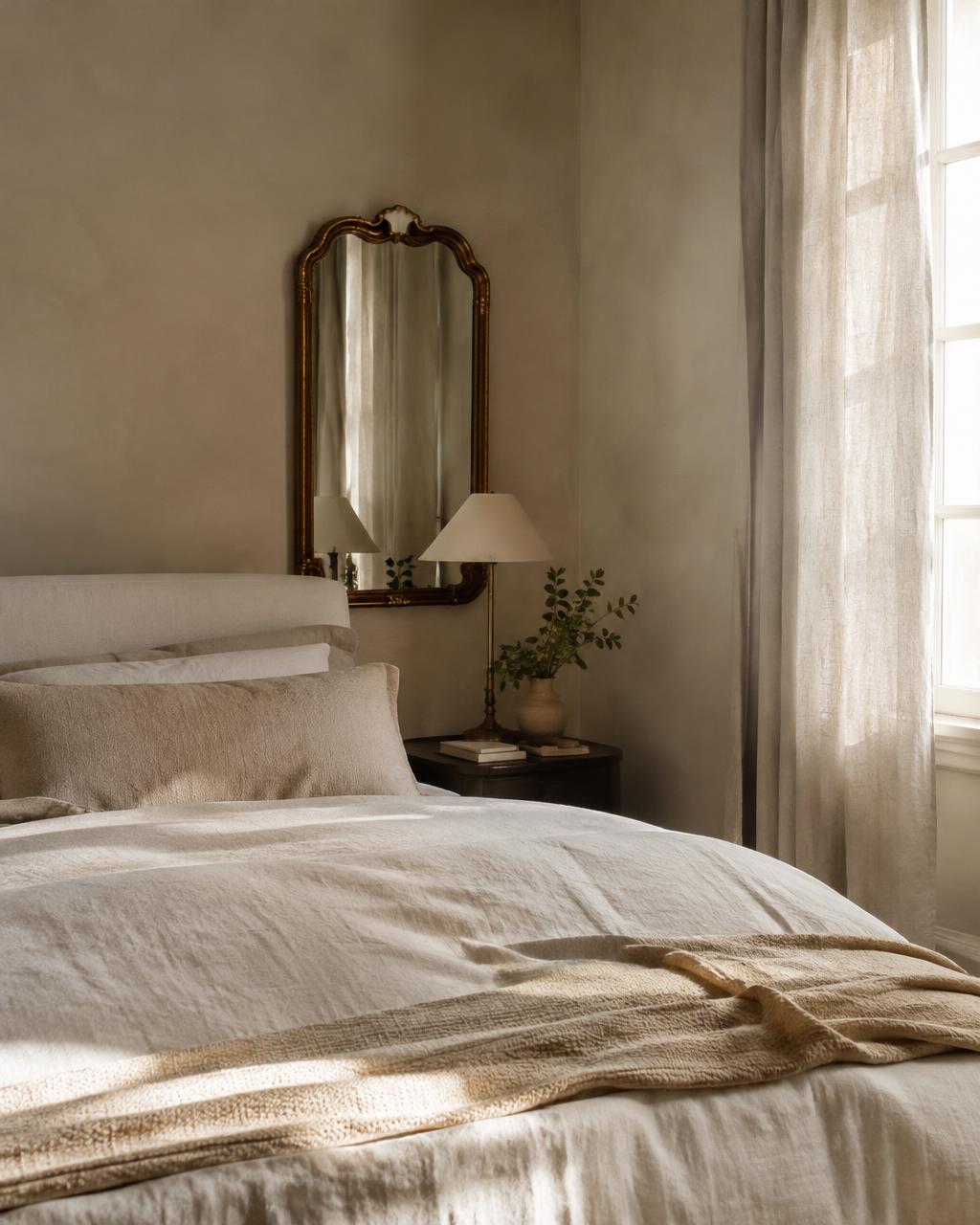
Of all the rooms in a home, the bedroom is the one most worth protecting. It is where the day begins and ends, and where we are at our most unguarded. A restful bedroom is not necessarily a minimal one, but it is an intentional one — every element chosen to quieten the senses rather than stimulate them.
A calm, enveloping palette
Soft, warm neutrals — oatmeal, clay, mushroom, warm white — tend to feel more restful than stark white or high contrast. Deeper, muted tones can be beautifully cocooning, particularly in smaller rooms or those used mostly at night.
Limit the palette and let texture provide interest instead: a limewashed or plaster-effect wall, timber with visible grain, a wool rug underfoot. A room that is visually quiet allows the mind to settle.
Layered, natural bedding
Bedding is the most intimate surface in the home. Natural fibres such as linen and cotton breathe well and soften with washing. Layering — a flat sheet, a quilt or coverlet, a throw at the foot of the bed — allows the bed to adapt through the seasons and gives it a generous, relaxed look.
Keep cushions to a sensible number. A bed should invite you in, not require ten minutes of rearranging before you can use it.
Light for winding down
Overhead lighting is useful for cleaning and dressing, but evenings call for something gentler. Bedside lamps or wall lights with warm-toned bulbs, ideally on dimmers, help the room shift into rest mode.
Consider light in the morning too. Layered window treatments — sheer curtains for softened daylight and a blockout layer for sleep — give you control over both privacy and darkness.
Fewer, better objects
Clutter is visual noise. Generous storage — built-in wardrobes, drawers in bedside tables, a bench with space beneath — lets surfaces stay clear. What remains on display should be chosen: a book you are reading, a small vessel, a piece of art that you love to wake up to.
Where possible, keep work and screens out of the room, or give them a discreet home. A bedroom that is used only for rest becomes easier to rest in.
Comfort you can feel
Rest is physical as well as visual. Think about the feel of a rug as you step out of bed, the acoustic softness that upholstered headboards and curtains bring, the temperature of the room through the year, and the placement of the bed so it feels anchored and protected rather than exposed to the doorway.
Designing for rest is ultimately an act of care. When the bedroom is calm, comfortable and free of distraction, it gives something back each night — a quiet place to return to, however full the day has been.